Magic Level 9 Music Piano Game
Beatwave StudioMusic
4.7804.00 Reviews
- Version
- 2.10.0
- Installs
- 10.00M
- Age Rating
- Everyone
Screenshots






Our Review of Magic Level 9 Music Piano Game
 Analysis by Appyee
I started Magic Level 9 Music Piano Game expecting a simple tile-tapping distraction, and that is exactly where its appeal begins. The first action is immediately understandable: watch the moving piano tiles and tap them in time with the music. There is no complicated setup to learn, no character build to manage, and no long tutorial standing between you and the first attempt. In a few seconds, I was already concentrating on the next note.
That simplicity makes this a very approachable music game for Android users who want a quick challenge rather than a large rhythm-game commitment. Beatwave Studio places the focus on songs, timing, and the pressure of keeping a clean run alive. The app is free, rated for Everyone, and sits in the Music category, so it is easy to understand why it has attracted a broad audience. It has passed the ten-million-install mark and holds a 4.7 average from around ninety-one thousand ratings, which suggests that the basic formula connects with many players.
How the tap-and-listen loop works in practice
I find the tap-and-listen loop works best when I treat the tiles as the main cue and the music as support: that keeps a lively track from pulling my timing off course. Before a difficult run, I also make sure the phone is steady and my finger can reach the play area comfortably. Those small choices help separate a genuine timing slip from avoidable setup friction.
The first tap is simple, but the next one demands attention
The best part of the opening is how quickly the game communicates its rules through action. A tile appears, I tap it, and another arrives almost immediately. The music gives the sequence a sense of direction, while the visual movement tells me where my attention should go next. This combination is more effective than a written explanation because I learn by doing: tap the correct tile, continue the pattern, and avoid losing the rhythm.
The game’s musical identity is deliberately broad. Its store presentation points toward Phonk, Kpop, popular hits, and the well-known Rush E challenge, so it is not trying to be a quiet piano simulator. It is built around recognizable modern energy and the playful difficulty associated with fast online music challenges. That variety matters because the same tapping mechanic feels different when the mood changes from a heavy beat to a brighter pop arrangement.
In my experience, the first few taps are relaxing, but the game quickly asks for more focus. I cannot comfortably look away while playing, even for a moment. That makes it suitable for short breaks, waiting rooms, or a few minutes before bed, although the faster sections are better played when I am alert and have both hands free. It is not a background game that I can operate while watching another video.
Visual feedback turns mistakes into immediate information
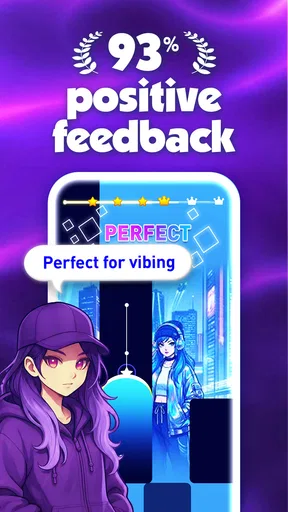
Every successful tap gives me a small sense of confirmation: I know I hit the intended tile, the sequence continues, and the song keeps moving. A mistake has the opposite effect. The run breaks, my attention is pulled back to what went wrong, and I am invited to try again rather than spend time recovering a complicated game state. That fast feedback is the main reason the loop feels lively instead of repetitive.
The important distinction is that the feedback is not only a reward after the song. It is also a correction during the song. If I tap too early, I become more cautious on the next attempt. If I rush because the pattern accelerates, I learn to watch the tile position instead of reacting only to the beat. This creates a useful connection between sound, sight, and finger movement, even though the controls themselves remain very small in scope.
Players who enjoy rhythm games will recognize this design immediately, but newcomers may need a little patience. The music can encourage me to tap with the beat, while the tile timing may require a slightly different response. Following the visual cue is safer than assuming every note lands exactly where my ear expects it to land. That is one of the first practical lessons I took from playing.
Why the reward is mostly personal improvement
The strongest reward is not a large progression system; it is the feeling of extending a run that ended too soon. I notice a clear difference between my first attempt at a difficult passage and a later attempt after I have memorized its movement. The reward comes from sharper timing, a longer sequence, and the satisfaction of finally passing a section that previously stopped me.
That structure works particularly well for players who like compact goals. I can decide to beat my last attempt, reach a difficult part of a song, or simply play until I make one careless tap. The target changes depending on my mood. On a tired day, completing a modest section is enough. When I want a challenge, I can keep returning to the same troublesome pattern and treat it like a small reflex exercise.
The “Magic Level 9” label gives the game a distinct identity, but I would not approach it expecting a full music-production tool or a traditional piano-learning course. The reward is arcade mastery, not the ability to read sheet music or perform a song on a real keyboard. That difference is important when choosing between this and a piano-learning app. Here, the music is the setting for a reaction challenge.
What makes another session begin
The reset is almost instant, and that is central to the game’s appeal. When I miss a tile, I do not have to rebuild a team, wait for energy, or return through several menus before trying again. The failed attempt becomes useful information, and the next run starts while the mistake is still fresh in my memory. I can remember the exact moment where my timing slipped and prepare for it immediately.
This creates a familiar “one more try” pattern. The first run tells me what is coming, the second tests whether I adapted, and the third often becomes a test of concentration rather than discovery. Because the action is so compact, the barrier to restarting is low. That is convenient, but it also means the game can quietly consume more time than intended. I have found it easy to begin with the plan of playing one song and continue because the previous run ended just before a satisfying breakthrough.
For a realistic everyday use, imagine waiting for a bus or taking a short break between tasks. I can play a few attempts without needing a long uninterrupted session. If I am interrupted, the game’s short-loop structure makes it easy to stop. On the other hand, someone looking for a calm game with no pressure may find the repeated failure-and-retry cycle more tense than relaxing, especially when the pattern becomes fast.
Offline play changes where it fits into a mobile routine
The store summary describes it as an offline piano rhythm game, which makes it more practical for travel, commutes, and places with unreliable connectivity. I like that this positioning matches the core loop: select the experience, tap through a run, and repeat without needing the game to function as a social platform. It is well suited to filling small gaps in the day when I do not want to stream video or depend on a stable connection.
Offline use also changes how I think about the app compared with larger rhythm titles. Many music games are designed around live events, online rankings, or constant content delivery. This one is more immediately self-contained in spirit. I can focus on the timing challenge rather than checking a broader service. For players who want a quick music game on a phone, that simplicity is a genuine advantage.
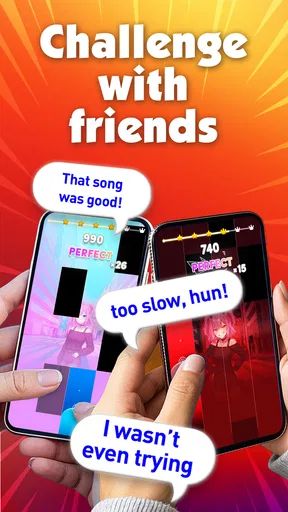
There is a trade-off, though. A self-contained rhythm loop may not provide the same sense of community, competition, or long-term collection-building as a larger alternative. If your main motivation is comparing scores with friends, unlocking a large roster of artists, or participating in scheduled events, a more feature-heavy rhythm game may hold your attention better. Magic Level 9 is strongest when the act of playing is enough.
Who will enjoy it most
I would recommend it to players who like quick reflex challenges, recognizable music styles, and repeated attempts with immediate consequences. It is also a good starting point for someone curious about rhythm games but unwilling to learn complicated controls. The age rating of Everyone makes the basic concept accessible to a wide audience, while the increasing speed gives experienced players a reason to keep testing themselves.
It suits several kinds of sessions. I can use it as a short mental warm-up, a way to pass a few idle minutes, or a focused challenge when I want something more active than a casual puzzle. The tile format is especially convenient on a phone because it needs only taps rather than a controller or external instrument. That makes the game easy to pick up almost anywhere, provided I can see the screen clearly and hear enough of the music to follow its mood.
I would be more cautious about recommending it to someone who wants deep musical education. Tapping falling tiles may improve attention and timing in a very general sense, but it does not replace practicing scales, reading notation, or learning hand independence on a piano. I would also point rhythm purists toward a different option if they require highly detailed calibration, extensive song organization, or a serious competitive system. This game’s strength is accessibility, not simulation depth.
Small habits that make difficult runs more manageable
My first useful habit was to stop chasing the sound alone. The music helps me stay engaged, but the tile itself is the final instruction. When a section becomes quick, I watch the next landing area and use the beat as support rather than treating it as the only timing guide. This reduces the number of late taps caused by getting carried away with the song.
A second habit is to keep my tapping motion small. Large finger movements make it harder to return to the next tile, particularly when the pattern changes direction. Light, controlled taps are more reliable than striking the screen with force. This sounds obvious, but it becomes important once the game stops feeling like a casual tapper and starts demanding a steady rhythm.
A third practical tip is to treat failed attempts as pattern study. Instead of immediately tapping faster after a mistake, I pay attention to whether I lost focus during a transition, reacted late to a visual change, or assumed the music would lead me perfectly. That approach turns repetition into a method. The reset is not merely a restart button; it is a chance to isolate one weak moment and improve it.
Screen position matters too. I get better results when the phone is stable rather than held loosely in one hand. A small shift in grip can make a tile feel farther away, and one-handed play becomes less comfortable during demanding passages. For a relaxed session, that is not a serious problem, but anyone chasing a cleaner run should give the device a firm resting position and avoid playing while walking.
Where the free format helps and where it can frustrate
Being free removes the biggest barrier to trying it. I can install the game as a low-commitment experiment, discover whether its music and pace suit me, and decide quickly if the loop is engaging. That is valuable in a category where personal taste matters so much. A player who dislikes one rhythm style may not enjoy the experience even if the controls are polished, while another player may find the same songs energizing.
The possible frustration comes from the narrowness of the central activity. Tapping tiles is satisfying when I am improving, but it can feel repetitive if I want exploration, story, or a wider range of interactions. The game asks me to enjoy refinement: seeing, tapping, missing, resetting, and trying again. If that cycle does not appeal to me after several attempts, more repetition is unlikely to solve the problem.
The current version is 2.7.0, and the game was released on June 14, 2025. Those details place it as a relatively recent title in my app library, but I judge it primarily by how well the immediate loop works. The developer, Beatwave Studio, has chosen a focused concept rather than building a broad multi-genre package. That focus is helpful for quick access, though it also makes the app’s limitations more visible because nearly everything depends on the quality of the tile-and-song interaction.
How it compares with other music-game choices
Compared with a piano-learning application, this game is faster to understand and much less demanding in terms of commitment. I do not need to study lessons or prepare an instrument. The trade-off is that the skills stay inside the game’s arcade framework. Anyone wanting structured musical progress should choose the educational route instead.
Compared with a large rhythm game built around characters, collections, stories, or online events, Magic Level 9 feels lighter and more direct. There are fewer layers between me and the next attempt. That is ideal when I want music and reflexes without managing a virtual world. It is less ideal when collecting content or competing with a community is the reason I play.
Compared with a traditional piano game that emphasizes slower melodies, its appeal is more energetic. The Phonk, Kpop, popular-hit, and Rush E direction gives the experience a modern challenge-game personality. I would choose it for short bursts of concentration and choose another alternative when I want gentle practice or a more authentic keyboard feel.
My verdict on the complete action-feedback-reward-reset cycle
After spending time with it, I think the game understands its purpose. The action is immediate: tap the correct tile. The feedback is clear enough to show whether my timing worked. The reward is personal improvement and the satisfaction of surviving a longer sequence. The reset is fast, which makes another session feel reasonable even after a mistake. That complete cycle is why the game remains easy to return to.
Its limitations are equally clear. It is not a piano course, not a deep music library manager, and not the best choice for someone seeking a large social rhythm ecosystem. Its repetition will either feel wonderfully focused or too narrow, depending on what I expect from a music game. I would skip it if I need detailed musical instruction or extensive long-term progression.
For everyone else, especially players who want a free, offline-friendly tap challenge that can fit into short breaks, it is an easy recommendation. I like that I can understand the objective immediately, improve through repetition, and start again without friction. The best reason to try it is the clean loop: act, hear and see the result, learn from the miss, then begin another run. That is not a complicated promise, but Beatwave Studio makes it tangible enough to keep my finger moving.
Privacy and Permissions
See what permissions an app requests and how it handles your data.
- Wi-Fi connection information
- view Wi-Fi connections
- Other
- view network connections, full network access, change your audio settings, control vibration, prevent device from sleeping, Google Play license check
Verdict
Strengths of Magic Level 9 Music Piano Game
- Simple tap controls make it easy for beginners to start playing.
- Short songs are convenient for quick gaming sessions.
- Increasing speed provides a satisfying challenge for rhythm-game fans.
- Bright visuals and musical feedback make each round engaging.
- Works well as a casual game for improving timing and reflexes.
Limitations of Magic Level 9 Music Piano Game
- Some tracks or features may require in-app purchases to unlock.
- Repeated songs can make the experience feel limited over time.
- Fast sections may be difficult on smaller phone screens.
- Gameplay may become repetitive without frequent content updates.
- Audio and visual effects can consume battery during longer sessions.
Other Releases by Beatwave Studio
View All
Music Hop: Rhythm Ball Games
Music4.4

Magic Cat Piano: Music Tiles
Music4.7
Similar Picks in This Category
View All
Tiles Hop Music & Ball Game
AMANOTES PTE. LTD.4.3

Magic Tiles 3™ - Piano Game
AMANOTES PTE. LTD.4.6

Real Piano
Bilkon3.7

Piano Game: Classic Music Song
Dream Tiles Piano Game Studio4.0

Smash Colors: Music Ball Rush
BADSNOWBALL HONGKONG LIMITED4.2

Piano Music Go-EDM Piano Games
Joy Journey Music Games4.5
Frequently Asked Questions
What is Magic Level 9 Music Piano Game?
Magic Level 9 Music Piano Game is a rhythm-based piano app in which you tap falling tiles in time with songs. The main challenge is to maintain accuracy and rhythm while the notes become faster and more complex. It is designed for short, accessible play sessions, although its increasing difficulty can also appeal to players who enjoy practicing reflexes and timing.
How do you play Magic Level 9 Music Piano Game?
Gameplay is based on tapping the correct piano tiles as they reach the target area on the screen. Players need to follow the rhythm rather than tap randomly, because missed or incorrectly pressed tiles can reduce the score or end a run. The controls are simple to learn, but higher levels require concentration, quick reactions, and a stable grip on the device.
Does Magic Level 9 Music Piano Game work without an internet connection?
Some parts of Magic Level 9 Music Piano Game may be available offline, particularly previously loaded gameplay content, but availability can depend on the version installed and how the app handles songs, advertisements, and updates. An internet connection may still be required for downloading additional content, displaying ads, synchronizing progress, or accessing certain features, so offline access should not be assumed for every mode.
Is Magic Level 9 Music Piano Game suitable for children?
The simple tap-based controls make Magic Level 9 Music Piano Game easy for many children to understand, and the music format can be entertaining for short periods. However, parents should review the app’s age rating, advertising, in-app purchase options, and privacy information before installation. Younger players may also need supervision, especially if the game includes frequent ads or optional purchases.
Does Magic Level 9 Music Piano Game contain ads or in-app purchases?
The app may include advertising or optional purchases, depending on the edition and platform available on your device. Ads can appear between rounds or while unlocking content, while purchases may be offered for removing advertisements, obtaining virtual items, or accessing additional songs and features. Before downloading, check the store listing and purchase settings so you understand any possible costs.
Play our best games!


